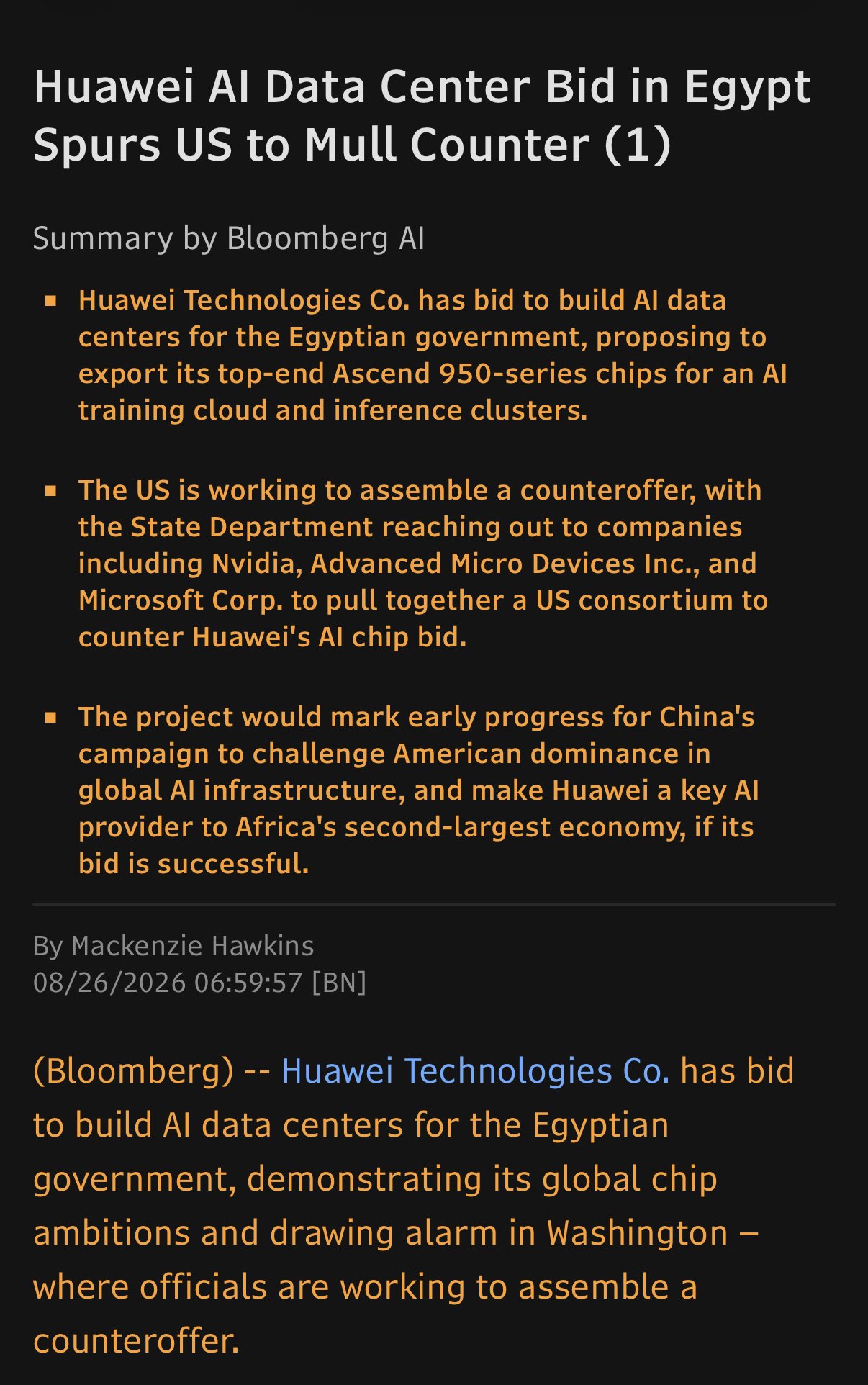
Instead of the US engaging with the global south because of the Red Scare during the Cold War. It engages due to the Chip Scare in the competition with China. x.com/CryptoHayes/status/20925…
· 57K Views
Back to @CryptoHayes
Instead of the US engaging with the global south because of the Red Scare during the Cold War. It engages due to the Chip Scare in the competition with China. x.com/CryptoHayes/status/20925…
· 57K Views
@CryptoHayes Different scare, same instinct to compete for influence before the other side gets there first
@CryptoHayes Hey Arthur, Technoqueue is live. Try: technoqueue.fun and check dm 🙏🏻♥️ x.com/kendinecrypto_/status/20…
@CryptoHayes The next geopolitical competition may not be about resources alone, but about compute power, chips and AI infrastructure. Whoever controls the infrastructure of intelligence will have a major influence on the next decade.
@CryptoHayes new scare, same playbook. the global south gets courted again
@CryptoHayes chip scare is a fun rebrand but the cold war had actual coups and proxy wars, this is just supply chain anxiety
@CryptoHayes supply chain anxiety doesn't hit like a proxy war
@CryptoHayes The global south gets courted, then discarded once the chips are secured
@CryptoHayes except the chip supply chain was always the real reason. cold war rhetoric just made it palatable to voters who wanted isolationism. now we're burning money on fabs in arizona that will never compete on cost.
@CryptoHayes Chip Scare sounds like a bad 80s horror movie Next up: the Rare Earth Panic
@CryptoHayes so we're just admitting the monroe doctrine was always about resources not ideology lmao. what's the play when tsmc gets hit tho, everyone pivots to domestic fabs that cost 3x as much?
@CryptoHayes it's now or never tho x.com/voicehavefun/status/2092…
@CryptoHayes The Chip Scare is Cold War logic with semiconductors replacing ideology
@CryptoHayes The “Chip Scare” really is becoming the new geopolitical lens.Semiconductors are no longer just an economic issue — they’re strategic infrastructure, and the competition with China is reshaping alliances, trade and foreign policy. 👀
Supply chain dependency and physical infrastructure lock, in are fundamentally different from ideological competition. You can't change hearts and minds to exit a fab network or mineral dependency. That makes the current entanglement structurally harder to unwind than anything the Cold War produced.
@CryptoHayes During the Cold War, ideology and military aid could fake alignment. Chip competition can't be faked the same way. You need fabs, education pipelines, energy grids. Real infrastructure or nothing. That's a fundamentally different kind of leverage being competed for.
The Cold War had containment. Today it's the Chip War. Back then, competition with the USSR pushed Washington to compete for influence across the newly independent, non-aligned world. Now, competition with China is pulling Washington deeper into AI infrastructure and semiconductor partnerships across the Global South. Different era. Same geopolitical instinct
@CryptoHayes What surprised me is the size. The whole bid is 2,008 chips, which Bloomberg says is about the power of a few hundred top Nvidia ones. Smaller than the story around it.
@CryptoHayes cold war was ideology, chip war is literally just who eats first. way more visceral and fast moving too
@CryptoHayes same geopolitical playbook, just replace communism with chips as the leverage point
@CryptoHayes The interesting part is the pattern: Washington keeps discovering that technology and geopolitics are basically the same game with different names.
@CryptoHayes Liquidity framing is useful when it explains behavior without forcing certainty